
Customer Surveys That Improve GCC Performance
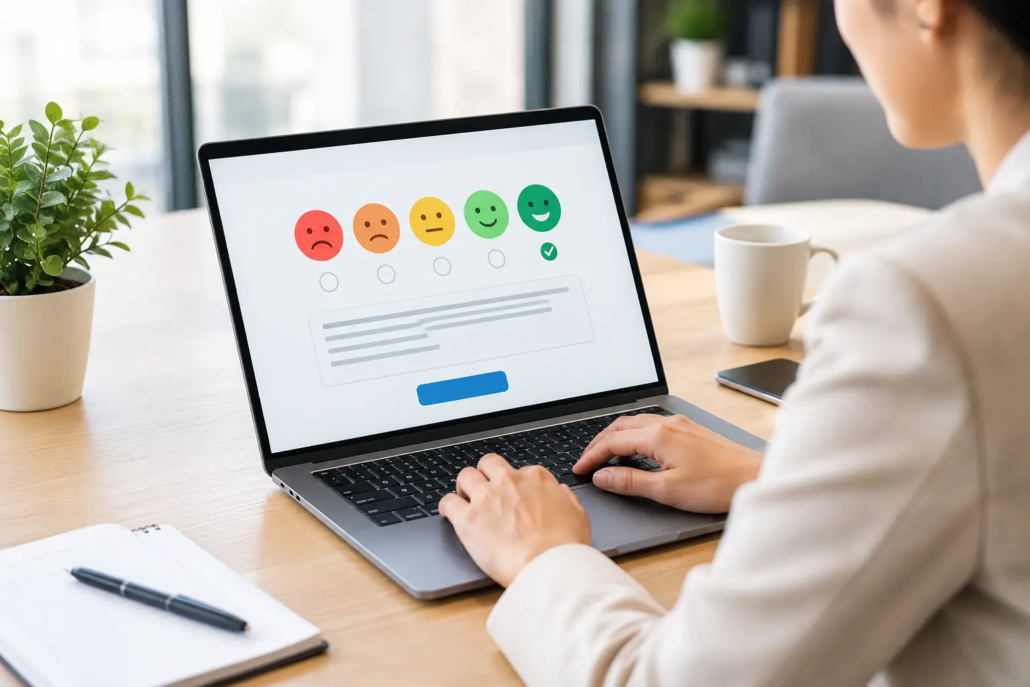
A branch can meet its sales target and still lose customers it should have retained. The warning signs are often quiet: a shopper who does not return, a guest who abandons a booking, or a parent who chooses another education provider after an unanswered concern. Customer surveys give businesses a structured way to hear those signals before they become a measurable decline in revenue, loyalty, or reputation.
For customer-facing organizations, feedback is not simply a marketing metric. It is operational evidence. It shows where the customer journey creates confidence, where it creates friction, and which issues deserve management attention first. Used well, surveys replace assumptions with a clearer view of what customers experience across branches, channels, and customer segments.
Why customer surveys matter to performance
Leaders already receive feedback from social media, call centers, sales teams, and online reviews. The problem is that these sources are incomplete and often biased toward the most dissatisfied or most vocal customers. They do not show how common an issue is, whether it affects a particular branch, or whether it is tied to a process, product, employee behavior, or customer expectation.
Well-designed customer surveys close that gap. They ask a defined group of customers consistent questions at the right point in the journey, then turn responses into patterns managers can act on. A restaurant group may learn that delivery customers value order accuracy more than speed. An electronics retailer may find that customers leave because product explanations vary sharply by store. A housing provider may uncover that response time after a maintenance request is the strongest driver of dissatisfaction.
These findings matter because not every negative score requires the same response. A low rating caused by a one-off product shortage should be managed differently from a low rating caused by repeated staff knowledge gaps. Survey research helps separate isolated incidents from recurring performance failures.
For GCC businesses operating across the UAE, Saudi Arabia, Qatar, Kuwait, Bahrain, and Oman, segmentation is particularly valuable. Customer expectations can differ by city, language preference, channel, and service category. A single overall satisfaction score can hide meaningful variation. Branch-level and segment-level evidence gives leaders a more precise basis for investment.
What a useful survey should measure
The strongest surveys are built around business decisions, not a long list of questions. Before writing the questionnaire, management should be able to state what it needs to learn and what it may do differently as a result.
A practical program usually measures three connected areas: overall sentiment, the drivers of that sentiment, and the likelihood of future behavior. Overall satisfaction indicates whether the experience met expectations. Driver questions identify why, such as staff helpfulness, waiting time, product availability, billing clarity, cleanliness, or issue resolution. Future-behavior questions indicate whether the customer intends to return, recommend, renew, or buy again.
This structure is more useful than asking, “Were you satisfied?” and stopping there. A score without context can alert management to a problem, but it cannot reliably tell a store manager, operations director, or HR leader what to change.
The right measures depend on the industry and touchpoint. A bank may prioritize trust, ease of completion, and resolution of service requests. A hospitality business may focus on arrival, room condition, staff responsiveness, and departure. A retailer may need to measure availability, assistance on the sales floor, checkout speed, and post-purchase support. The questions should reflect the moments that influence loyalty and commercial outcomes.
Design customer surveys around real customer moments
Timing affects the quality of the answer. Asking customers to rate an experience several weeks later can produce vague recollections. Asking immediately after a transaction can capture detail, but may miss whether a delivery arrived correctly or whether a support case was resolved. The best timing depends on what is being measured.
Transaction surveys work well after a completed purchase, appointment, delivery, call, or visit. They are effective for identifying operational issues at a specific touchpoint. Relationship surveys, sent less frequently, assess the broader view of the brand and are more appropriate for long-term customers, members, tenants, or account holders.
Question wording also requires discipline. Neutral language produces more dependable results than questions that suggest the preferred answer. “How clearly did the advisor explain the options?” is more useful than “Did our helpful advisor explain the options clearly?” Each question should cover one subject. Combining two topics, such as staff friendliness and product knowledge, makes the result difficult to interpret.
Keep the survey short enough for the channel and customer context. A customer who has just paid for coffee may answer three focused questions. A business client completing an annual account review may provide more detailed feedback. Longer is not automatically better. Every unnecessary question lowers completion quality and increases the risk that customers abandon the survey.
Language and accessibility deserve equal attention in the GCC. If the business serves multilingual customer groups, the questionnaire must be professionally adapted rather than translated word for word. The meaning, tone, scale labels, and local terminology should remain consistent across versions. Otherwise, reported differences may reflect the survey design rather than the experience itself.
Turn survey results into operational action
Collecting responses is the beginning of the work, not the finish. A dashboard full of averages does not improve a customer experience unless someone owns the next action, has a deadline, and can measure whether the correction worked.
Start by reviewing results at the level where decisions can be made. Senior management may need an enterprise view, while regional leaders need comparisons across markets and branch managers need feedback tied to their location. Look for patterns over time rather than reacting to every individual comment or weekly movement. A small sample can fluctuate. A repeated gap across several reporting periods deserves attention.
Open-ended comments add essential context. They can reveal the language customers use to describe a problem and expose issues that fixed-answer questions did not anticipate. However, comments should be coded into themes rather than treated as isolated anecdotes. If multiple customers mention unclear promotions, slow callbacks, or inconsistent greetings, those themes can be compared with score trends and operational data.
The most effective response process is straightforward:
- Identify the two or three experience drivers with the largest commercial or loyalty impact.
- Assign a named owner for each improvement, whether in operations, training, marketing, or customer care.
- Define the expected change, such as reduced wait time, clearer communication, or improved first-contact resolution.
- Measure the same driver again after the action has had time to take effect.
This creates accountability. If satisfaction is low because customers cannot find assistance in a store, the solution may involve staffing schedules, floor management, or training. If customers say they receive inconsistent information about a promotion, the answer may be better briefing materials and controls, not a broad customer-service workshop.
Avoid the survey mistakes that waste customer goodwill
Survey fatigue is real. Sending repeated requests after every small interaction can reduce response rates and irritate otherwise loyal customers. Establish contact rules that limit frequency and prevent the same person from receiving overlapping surveys. This is particularly important for businesses with frequent transactions, such as grocery, food service, telecom, and retail.
Another common mistake is treating a favorable overall score as proof that operations are healthy. A strong average can conceal serious issues within a specific branch, customer group, or journey stage. Review distribution as well as averages. Are a growing number of customers rating one location poorly? Are first-time customers less satisfied than returning customers? These questions are often more valuable than the headline number.
Leaders should also resist using surveys as the sole measure of frontline performance. Scores can be influenced by price changes, product availability, external delays, and customer expectations outside an employee’s control. Pair customer feedback with service observations, operational KPIs, complaint records, and relevant sales or retention data. The combined evidence is stronger and fairer.
When independent research adds value
Internal feedback programs are useful, but they can face challenges around questionnaire design, sampling, interpretation, and objectivity. An independent research partner can help organizations define the right audience, select suitable collection methods, analyze patterns across locations, and present findings in a format that supports management action.
This is especially useful when a business needs to compare locations, understand a declining retention rate, test a new service model, or hear from customers who have stopped engaging. Undercover supports organizations with structured customer research that connects field evidence and survey feedback to practical performance improvement.
The real value of customer surveys is not the response rate or the dashboard. It is the management habit they create: listen consistently, identify the cause of friction, act with ownership, and check whether the customer experience actually improved.